
To subscribe, advertise or contribute articles to www.asiamanufacturingnewstoday.com contact publisher@xtra.co.nz
  • Home
  • Advertise
  • Subscribe
  • Archives
Asia Manufacturing News
The official site for the Asia Manufacturing News magazine
  • Home
  • AI
  • Analysis
  • Aviation
  • Big Data
  • Business News
  • Calendar
  • Case Studies
  • Change the Conversation
  • Climate Change
  • Covid-19
  • Developments
  • Energy
  • Engineering
  • Events
  • Manufacturing Technology
  • Innovators
  • IoT
  • Manufacturing Technology
  • News
  • Product News
  • Smart Manufacturing
  • The Creative Class
  • The Interview
  • Webinars

News Ticker

Drive down total cost of ownership with data-driven insights
ThaiNamthip completes Asia’s first installation of Sidel’s Hydra Ultrasonic, boosting sustainability and excellence
Eight global climate tech start-ups shortlisted from 1,500 entries for The Liveability Challenge 2026 
MHI completes transfer procedures for domestic onshore wind power business
Nanbu Relay Center completed
UMOE Advanced Composites starts large-scale production in China
Southeast Asia identified as most attractive region for Advanced Manufacturing Investment
MAF801 Expandable Edge AI Computer from IBASE

Low-tech manufacturing, the new hidden champion of innovation

The so called “Low Tech” companies are vitally important because they employ 60% of workers.

We have been overlooking the value and innovation that goes on in so called “low tech” companies, according to a European expert on industry.

Auckland University recently hosted Prof. Dr. Hartmut Hirsch-Kreinsen Chair of Economic and Industrial Sociology TU Dortmund University, Germany.Low-tech PIC
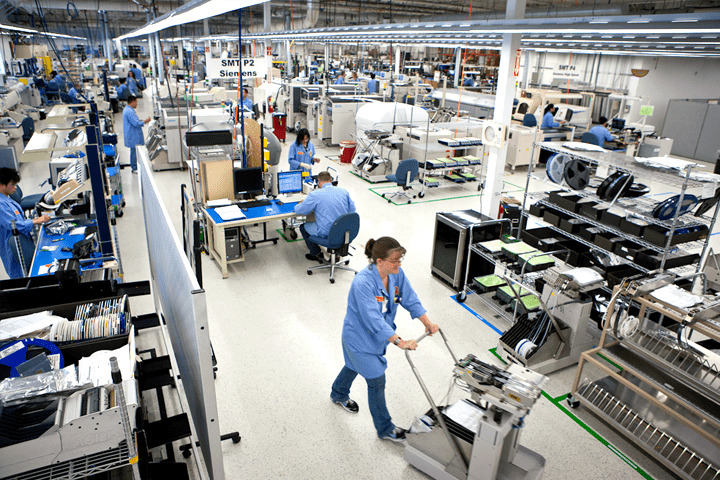
He spoke about the latest research that is uncovering these “low tech” innovators. He says everyone has been in love with “high-tech”companies, the definition of which is companies that have an R & D investment of over 5% of turnover and “low tech” having 1% or less investment in R & D. However the so called “Low Tech” companies are vitally important because they employ 60% of workers – many more than the medium to high tech companies, and they are remarkably stable and innovative in a specific way.

Common attributes are step by step product improvement, incremental innovation, small batches and also large scale production, relatively stable market segments, close to important customers, flexible and fast delivery, and semi-skilled or unskilled workers. They have the capacity to integrate external knowledge and high tech components and are the recipients and carriers of high tech innovations. They learn by doing, trial and error and have the capability to manage networks.

Policymakers (Callaghan Innovation and MBIE) should also focus on the so called “low-tech” businesses. Innovation is more than just R & D investment as low tech businesses are good at using high tech developed elsewhere and leveraging it in innovative ways. So what can policy makers do to support? Prof Kenneth Husted from Auckland University says;
• Support creative reconstruction (don’t write off industries as “sunset” just because they are going through change)
• Stimulate collaboration across sectors and size
• Support to aggregate local lead user needs (e.g. innovation consulting services – in the absence of a large business ecosystem)
• Support locally embedded technology commercialisation and growth (e.g. technology parks)
• Leverage public procurement to stimulate innovation (this is one I have been promoting for some time now)
• Produce more people with tertiary qualifications in manufacturing.
The upshot of all this is that we may need to question the validity of R & D intensity indicators as a good basis for innovation policy.

Share this:

Related Posts

Viet Food and Beverage

Business News /

Vietfood & Beverage – Propack Vietnam 2026 in Ho Chi Minh City

Tamaka

Developments /

Tanaka commences operation of H2 Nexus

Singapore 1

Business News /

NTU Singapore scientists develop cleaner way to recycle mixed plastic packaging

‹ Software AG Appoints Stanimira Koleva  COO for Asia Pacific and Japan› Sage waste absorbs oil spills

27th July 2026

Recent Posts

  • Vietfood & Beverage – Propack Vietnam 2026 in Ho Chi Minh City
  • Tanaka commences operation of H2 Nexus
  • NTU Singapore scientists develop cleaner way to recycle mixed plastic packaging
  • India engages Monash University to optimise rail maintenance in Dedicated Rail Freight Corridors
  •   DigiTech ASEAN Thailand & AI Connect 2026 forTechnology Leaders, AI Innovators, and Business Decision-Makers 
  • Rigaku Solutions Center Osaka to strengthen global semiconductor metrology service 
  • Drive down total cost of ownership with data-driven insights
  • Murata expands product information management API service 
  • ThaiNamthip completes Asia’s first installation of Sidel’s Hydra Ultrasonic, boosting sustainability and excellence
  • Applied Materials expands Singapore manufacturing to support AI chip demand

Categories

  • AI
  • Analysis
  • Aviation
  • Big Data
  • Business News
  • Calendar
  • Case Studies
  • Change the Conversation
  • Climate Change
  • Covid-19
  • Developments
  • Energy
  • Engineering
  • Events
  • Innovators
  • IoT
  • Manufacturing Technology
  • Manufacturing Technology
  • News
  • Product News
  • Smart Manufacturing
  • The Creative Class
  • The Interview
  • Uncategorized
  • Webinars

Archives

Back to Top

  • Home
  • AI
  • Analysis
  • Aviation
  • Big Data
  • Business News
  • Calendar
  • Case Studies
  • Change the Conversation
  • Climate Change
  • Covid-19
  • Developments
  • Energy
  • Engineering
  • Events
  • Manufacturing Technology
  • Innovators
  • IoT
  • Manufacturing Technology
  • News
  • Product News
  • Smart Manufacturing
  • The Creative Class
  • The Interview
  • Webinars

To subscribe, advertise or contribute articles to asiamanufacturingnewstoday.com contact publisher@xtra.co.nz

(c) Asia Manufacturing News, 2026