
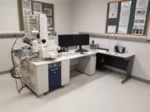
Hitachi Hi-Tech announces SU96000 electron microscope
Accelerating the expansion of digitalised assets and the deployment of Lumada 3.0 with a focus on the semiconductor field through the launch of a flagship model. Ultrahigh-Resolution Scanning Electron Microscope SU9600 Hitachi High-Tech Corporation has launched the Ultrahigh-Resolution Scanning Electron Microscope SU9600, which allows for highly accurate and precise observation of substances down to the sub-nano level(*1). The SU9600 retains the world-leading high resolution. It also incorporates efficient and automated functions to provide improved throughput of data acquisition, thereby helping users with highly precise and highly efficient observation. In response to the growing demand for large-scale data analysis driven by the rise of AI, Hitachi High-Tech supports the research and development of next-generation semiconductors and advanced materials. Hitachi Group is advancing Lumada 3.0, providing digital services that combines data generated from digitalized assets with domain knowledge and advanced AI. Through the SU9600 as a digitalized asset that acquires and generates data, Hitachi High-Tech is realizing the digital service “HMAX for Industry” that embodies Lumada 3.0, aiming to deliver greater value to our customers. By focusing on “Integrated Industry Automation” which aims to expand “HMAX for Industry” into growth industries horizontally such as semiconductors, we will contribute to drive innovation for frontline workers. (*1) Sub-nano level: Less than one nanometer (one millionth of a millimeter) in size. SU9600 Development Background Scanning Electron Microscopes (“SEM”) are used in a wide range of fields, including semiconductor devices, electronics and advanced materials. They have become indispensable in cases requiring high-precision observation of microstructures, including everything from research and development to process control at production sites. In particular, the recent surge in AI-driven demand within the semiconductor market has accelerated development cycles and created a growing need for high-precision, high-throughput analysis using SEMs. This is driven by the requirement for faster innovation and precise […]