Siemens’ AI powered Nanjing facility named World Economic Forum Global Lighthouse Factory
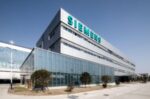
The World Economic Forum (WEF) has named Siemens’ Nanjing factory in China as a Lighthouse Factory, adding it to the WEF’s Global Lighthouse Network of the most advanced operational sites in the world. Distinguished in the productivity category, the WEF recognised the Nanjing factory for achieving exceptional performance in cost and quality through digital twins and continuous AI-driven transformation. The award highlights improvements in asset utilisation, worker enablement and resource management. The Siemens plant in Nanjing is the fifth Siemens manufacturing site to be named Lighthouse Factory by the WEF, following Amberg, Erlangen and Fürth in Germany, and Chengdu in China. “We call our Nanjing facility a ‘digital-native factory.’ It was designed, tested, and optimised entirely in the virtual world before a single brick was laid. This approach not only enabled us to construct the factory faster and with outstanding cost-efficiency but also to build it under the toughest pandemic conditions. By combining our global manufacturing expertise with local insight and a digital-first mindset, we continuously optimise every part of the operation, making it one of the most efficient and flexible factories in the world,” said Cedrik Neike, Member of the Managing Board of Siemens AG and CEO Digital Industries. The WEF jury was convinced by the continuous digital transformation of the production site and the cutting-edge implementation of AI applications. The factory overhauled its production processes in response to mounting operational pressures. The production site was facing increasingly varied customer orders requiring production line reconfiguration every four weeks. Another challenge was that delivery windows had shrunk from 45 days to 10 while market demand was fluctuating. To address these challenges in its high-variety, low-volume manufacturing operations, Siemens implemented a digital excellence strategy, deploying end-to-end digital twins, modular automation, manufacturing operations management systems, and more than 50 artificial intelligence […]