
To subscribe, advertise or contribute articles to www.asiamanufacturingnewstoday.com contact publisher@xtra.co.nz
  • Home
  • Advertise
  • Subscribe
  • Archives
Asia Manufacturing News
The official site for the Asia Manufacturing News magazine
  • Home
  • AI
  • Analysis
  • Aviation
  • Big Data
  • Business News
  • Calendar
  • Case Studies
  • Change the Conversation
  • Climate Change
  • Covid-19
  • Developments
  • Energy
  • Engineering
  • Events
  • Manufacturing Technology
  • Innovators
  • IoT
  • Manufacturing Technology
  • News
  • Product News
  • Smart Manufacturing
  • The Creative Class
  • The Interview
  • Webinars

News Ticker

Southeast Asia identified as most attractive region for Advanced Manufacturing Investment
MAF801 Expandable Edge AI Computer from IBASE
China Import and Export Fair Complex, Guangzhou, 4 – 6 March 2026
Veolia expands mobile water services fleet to address growing needs in Oceania
Hitachi Hi-Tech announces SU96000 electron microscope
Vingroup establishes VinMetal steel manufacturing company, enters Metallurgy Industry
Kaynes and DigiLens launch India’s first advanced waveguide manufacturing line 
Black & Veatch contribute global, regional best practices in sustainable infrastructure at Enlit Asia 2025

Made in China

This is the surprising story of how Cold War foes found common cause in transforming China’s economy into a source of cheap labor, creating the economic interdependence that characterises our world today.

For centuries, the vastness of the Chinese market tempted foreign companies in search of customers. But in the 1970s, when the United States and China ended two decades of Cold War isolation, China’s trade relations veered in a very different direction.
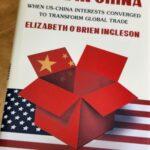
Elizabeth Ingleson shows how the interests of US business and the Chinese state aligned to reframe the China market: the old dream of plentiful customers gave way to a new vision of low-cost workers by the hundreds of millions.

In the process, the world’s largest communist state became an indispensable component of global capitalism.

Drawing on Chinese- and English-language sources, including previously unexplored corporate papers, Ingleson traces this transformation to the actions of Chinese policymakers, US diplomats, maverick entrepreneurs, Chinese American traders, and executives from major US corporations including Boeing, Westinghouse, J. C. Penney, and Chase Manhattan Bank.

Long before Walmart and Apple came to China, businesspeople such as Veronica Yhap, Han Fanyu, Suzanne Reynolds, and David Rockefeller instigated a trade revolution with lasting consequences. And while China’s economic reorganisation was essential to these connections, Ingleson also highlights an underappreciated but crucial element of the convergence: the US corporate push for deindustrialisation and its embrace by politicians.

Reexamining two of the most significant transformations of the 1970s—US-China rapprochement and deindustrialisation in the United States—Made in China takes bilateral trade back to its faltering, uncertain beginnings, identifying the tectonic shifts in diplomacy, labor, business, and politics in both countries that laid the foundations of today’s globalised economy.

Share this:

Related Posts

Aerotec

Analysis /

Aerotech’s expanded Scan Head Line brings industry-leading performance to more applications

India EU trade agreement

Business News /

What does EU and India free trade agreement mean for global trade?

Smart Production Guangzhou 2026

Developments /

Southeast Asia identified as most attractive region for Advanced Manufacturing Investment

‹ Supply chain shifts to drive more manufacturing to Southeast Asia and India › Mitsui Copper Foil (Malaysia) Sdn. Bhd. Honoured with Two Excellence Awards from Kepner-Tregoe

3rd February 2026

Recent Posts

  • Aerotech’s expanded Scan Head Line brings industry-leading performance to more applications
  • What does EU and India free trade agreement mean for global trade?
  • Southeast Asia identified as most attractive region for Advanced Manufacturing Investment
  • Siemens’ AI powered Nanjing facility named World Economic Forum Global Lighthouse Factory
  • How CTEM, AI, and access control redefine OT security in 2026
  • MAF801 Expandable Edge AI Computer from IBASE
  • AI hype is fueling a bubble in humanoid robotics
  • The Next Phase of Manufacturing in Asia: Predictive, Connected and Human-Centric
  • Valmet’s solution for improved waste management and resource efficiency at  South Korean incineration facility
  • IBASE receives its first Taiwan Excellence Silver Award

Categories

  • AI
  • Analysis
  • Aviation
  • Big Data
  • Business News
  • Calendar
  • Case Studies
  • Change the Conversation
  • Climate Change
  • Covid-19
  • Developments
  • Energy
  • Engineering
  • Events
  • Innovators
  • IoT
  • Manufacturing Technology
  • Manufacturing Technology
  • News
  • Product News
  • Smart Manufacturing
  • The Creative Class
  • The Interview
  • Uncategorized
  • Webinars

Archives

Back to Top

  • Home
  • AI
  • Analysis
  • Aviation
  • Big Data
  • Business News
  • Calendar
  • Case Studies
  • Change the Conversation
  • Climate Change
  • Covid-19
  • Developments
  • Energy
  • Engineering
  • Events
  • Manufacturing Technology
  • Innovators
  • IoT
  • Manufacturing Technology
  • News
  • Product News
  • Smart Manufacturing
  • The Creative Class
  • The Interview
  • Webinars

To subscribe, advertise or contribute articles to asiamanufacturingnewstoday.com contact publisher@xtra.co.nz

(c) Asia Manufacturing News, 2026